A gentle, gut-led addition to everyday nourishment
If you’re interested in gut health, digestion, or getting more from the foods you already eat, bee bread is a beautifully natural place to begin.
It’s rich, slightly tangy, and deeply connected to how bees preserve food in the hive. Less about quick boosts, more about long-term balance, bee bread suits people who are curious about fermentation, absorption, and food that works with the body rather than pushing it.
Here’s what bee bread is, what makes it nutritionally interesting, and how people use it in a way that feels realistic and sustainable.
What is bee bread?
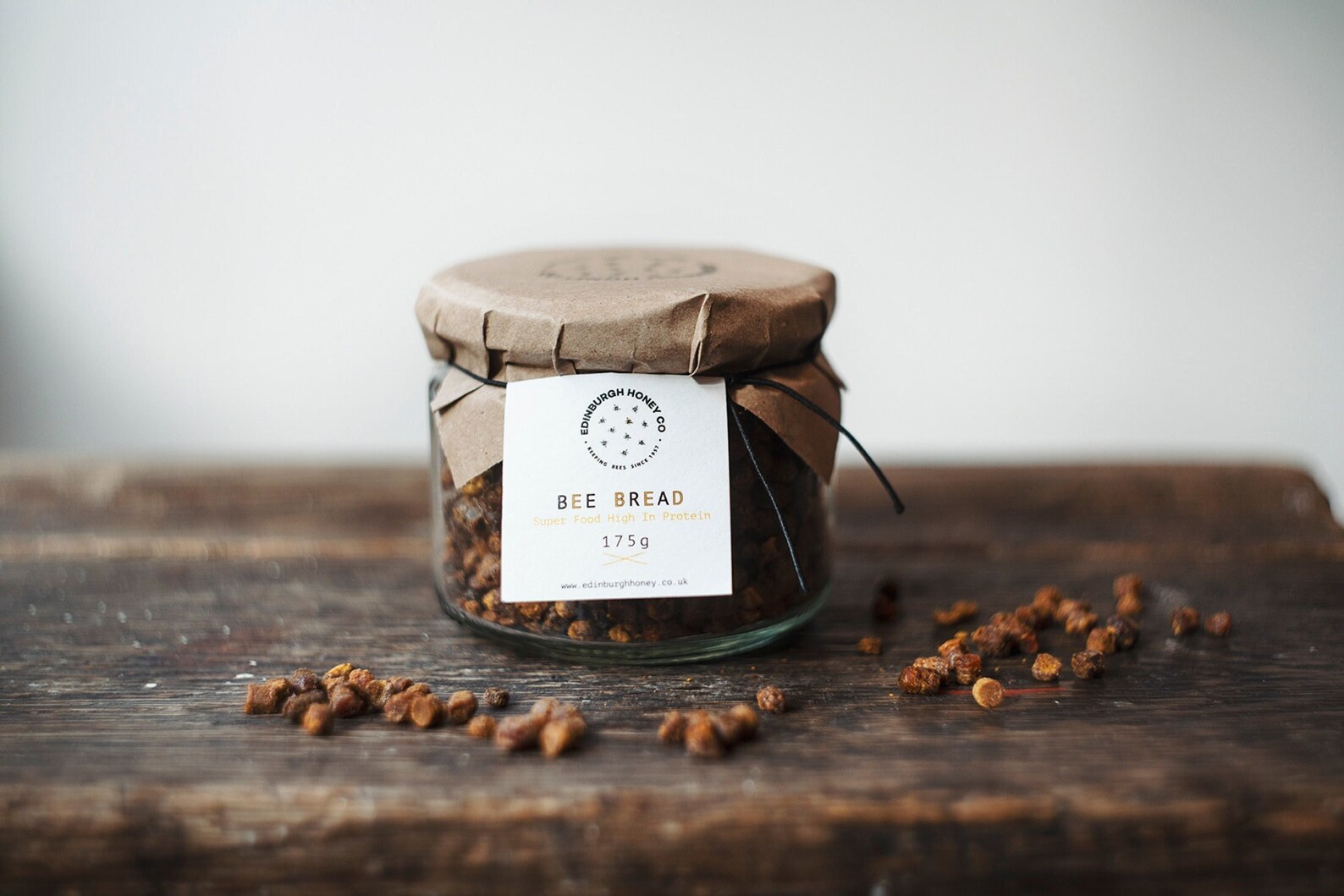
Bee bread starts life as bee pollen. When bees bring pollen back to the hive, they mix it with honey and enzymes and store it in the comb, where it undergoes natural lactic-acid fermentation.
Over time, this fermentation breaks the pollen down and preserves it, creating bee bread, a nutrient-dense food that bees rely on for long-term nourishment.
The result is a hive product that is:
- naturally fermented
- rich in a wide range of nutrients
- often easier to digest than whole pollen
Like all hive products, bee bread varies with season and forage. Its flavour, texture, and colour reflect the landscape the bees are working in, a reminder that this is a living food shaped by plants, weather, and time, not something manufactured to be identical year-round.
Why people choose bee bread (practical, food-first reasons)
Let’s keep this grounded. Bee bread isn’t about dramatic promises. People are drawn to it because of how it’s made, how it’s experienced, and how naturally it fits into gut-focused routines.
1. A naturally fermented food made by bees
Bee bread is created when bees store pollen in the hive and allow it to ferment slowly over time. This process helps preserve the pollen and changes its structure before it’s eaten.
What this means for you: fermented foods have been part of human diets for centuries. Many people are drawn to them because they feel gentler, more familiar, and easier to include as part of everyday eating.
2. A naturally complex nutrient profile
Bee bread contains proteins, carbohydrates, fats, fibre, vitamins, minerals, enzymes, and naturally occurring bioactive compounds, much like bee pollen, but in a fermented form.
Why this matters: when we eat food, our bodies don’t take in nutrients one by one. They arrive together, in combination. Foods that stay closer to their natural form tend to provide nutrients in the way the body expects to receive them.
That’s why some people prefer whole, fermented foods like bee bread instead of supplements that focus on just one vitamin or compound at a time. It feels less like “adding something extra” and more like gently supporting the body with real food.
3. A gentler way to enjoy pollen
Because bee bread has already been broken down during fermentation, many people describe it as easier to digest than whole pollen.
In everyday terms: bee bread is often chosen by people who like the idea of pollen, but want a softer, slower introduction especially when digestion is a priority.
4. Small amounts, naturally satisfying
Bee bread has a deeper, slightly tangy flavour compared to bee pollen. A little goes a long way.
What this means for you: you don’t need much. Bee bread is often used in small, considered amounts, making it a natural fit for simple, food-first routines.
5. A food-first alternative to gut supplements
Many people discover bee bread while looking for alternatives to capsules, powders, or highly processed probiotic products.
Why: bee bread is traditional, recognisable food. It isn’t designed to target one specific outcome, it’s meant to sit comfortably alongside other whole and fermented foods in a balanced diet.
How bee bread fits into everyday routines
There’s no single “correct” way to use bee bread. The key is to start gently and see what suits you.
A simple approach:
- Begin with a small amount (¼ teaspoon is plenty)
- Take it on its own or with food
- Notice how it feels over time
Easy ways to enjoy it
- Stir into yoghurt or kefir
- Take with a spoon of honey
- Add to overnight oats
- Enjoy it plain, followed by water
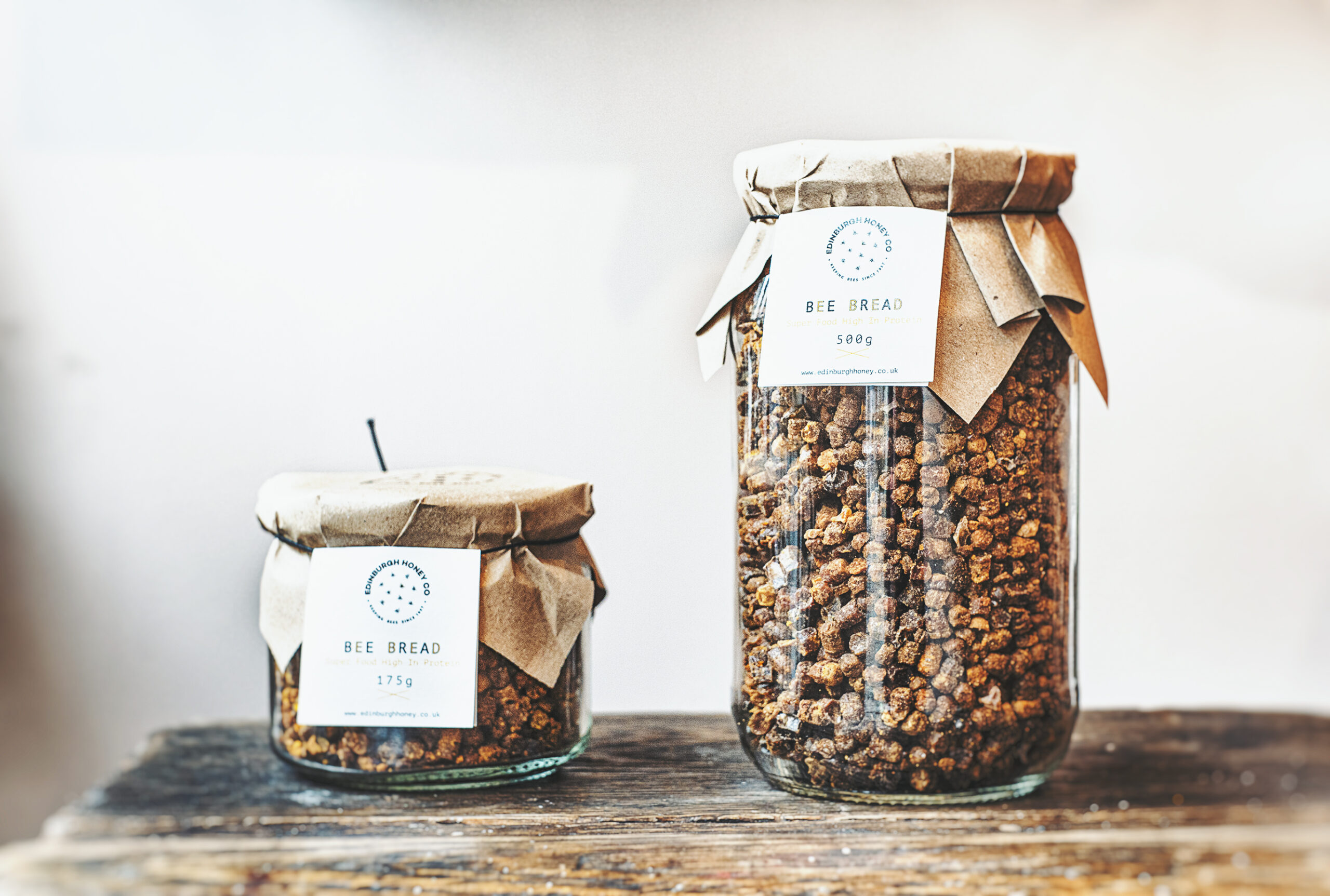
Ready to try bee bread?
If your focus is digestion, balance, and building habits that last, bee bread offers a calm, food-first way forward.
Explore our Bee Bread online, or visit our Edinburgh shops, we’re always happy to help you decide whether bee bread, bee pollen, or a combination suits you best.
Bee bread and bee pollen: how they fit together
Bee pollen and bee bread come from the same place, but they suit different needs.
- Bee pollen is often the starting point: light, crunchy, easy to sprinkle
- Bee bread is chosen by those focused on digestion, fermentation, or long-term gut health
Some people use both at different times; others find one fits better than the other. There’s no hierarchy just different paths.
Read next: Bee Pollen blog | Bee Bread Vs Bee Pollen
A responsible research note
Bee bread is a traditional fermented food from the hive, and research into its composition focuses on fermentation, nutrient availability, and natural microbial processes. As with bee pollen, results vary depending on origin and production, and human evidence is still developing.
Bee bread isn’t a medicine, and it’s not intended to diagnose or treat any condition. If you’re managing a health concern or unsure whether fermented foods are right for you, it’s sensible to check with a qualified professional.
This article was informed by academic research exploring how bees naturally ferment pollen into bee bread, as well as broader research into fermented foods and hive-based nutrition. If you’d like to explore the research context further, the following publications offer useful starting points:
References
Vásquez, A. & Olofsson, T. C. (2009)
The lactic acid bacteria involved in the production of bee pollen and bee bread.
Journal of Apicultural Research.
https://doi.org/10.3896/IBRA.1.48.3.07
Bakour, M. et al. (2019)
Bee bread as a functional product: Chemical composition and bioactive properties.
LWT – Food Science and Technology.
https://www.sciencedirect.com/science/article/abs/pii/S0023643819300908
Kieliszek, M. et al. (2018)
Pollen and bee bread as new health-oriented food products: A review.
Trends in Food Science & Technology.
https://www.sciencedirect.com/science/article/abs/pii/S0924224417301681